

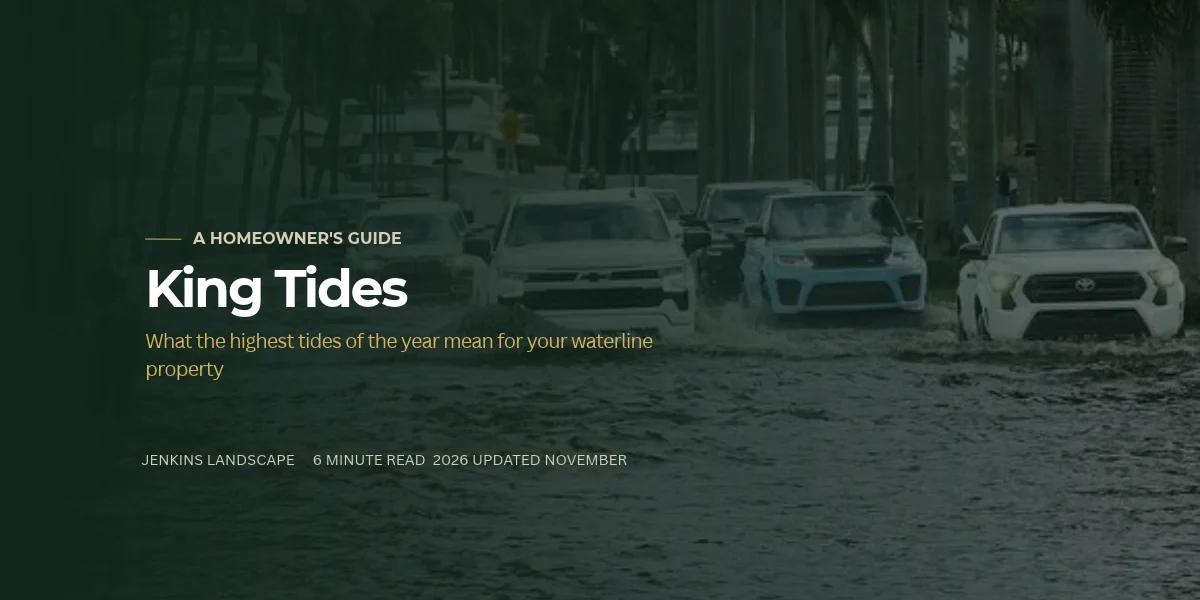
King Tides in South Florida: A Homeowner’s Guide
This winter, even longtime Treasure Coast locals have been pausing at the water’s edge. Our own VP, Erin Jenkins Banas, put it plainly: “The king tides are the highest I’ve ever seen.” If your property fronts a canal, pond, or inlet, those higher-than-usual winter tides can reach your lawn, your drains, and your shoreline. And the next few weeks are exactly when you should be paying attention. Here’s what king tides are, when they hit, and how to protect your property before the water arrives.
What Are King Tides?
King tides — technically called perigean spring tides — are the highest tides of the year. They happen when the moon and sun line up with the Earth and the moon is at its closest point to our planet. That combined pull pushes bay and ocean water noticeably higher than a typical daily high tide.
According to the National Ocean Service, king tides are a completely natural, predictable event — they occur a few times every single year. They aren’t an emergency or a warning sign. But they are a mirror. On a normal day, a low spot stays dry. During a king tide window, that same spot tells you exactly what will happen when the water gets a little higher, the winds get a little stronger, or the rains get a little heavier.
Why the Treasure Coast Feels High Tides in Winter
Along Florida’s east coast, the year’s highest tides typically arrive from late November through January. Warm Gulf Stream water piles against the shore in the cooler months, prevailing onshore winds push it toward land, and sea level rise adds a baseline to every single high tide. The result: the same inlet that behaves in June can wet your lawn in December.
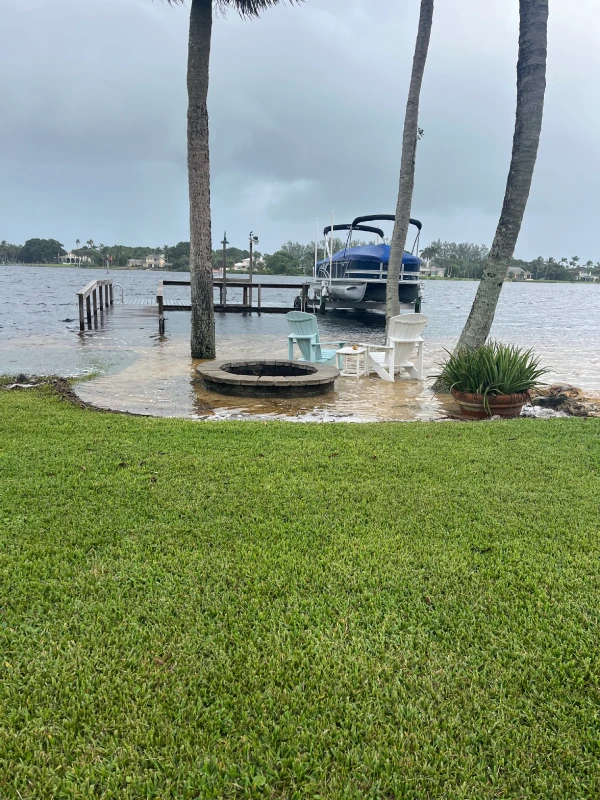
Here on the Martin County and North Palm Beach waterfront, that winter pattern shows up in a few predictable ways. Salt water creeps across lawns and into garden beds, salt spray settles on nearby plants, and drains that normally run fine start backing up or trickling the wrong way. Most homeowners notice the lawn first — patches of stressed or yellowing St. Augustine after the water drains back out. That’s salt working over the root zone, and it’s one of the most common waterline complaints we see from late fall through early spring.
In addition, king tides are a good time to honestly look at your shoreline. Every high-tide wave is a small rehearsal, and any erosion you see now will deepen with every big tide that follows.
When to Watch: King-Tide Windows This Winter
King tides arrive in short windows of a few days around each full moon and new moon. This winter, that means your highest-risk days fall roughly between late November and mid-January. For exact tide heights at your location, check the NOAA Tides & Currents tool using the Hobe Sound station, and follow the National Weather Service’s Melbourne office for any high-tide or coastal flood advisories.
How to Protect Your Waterline Property During King Tides
You can’t change the tide, but you can change what the tide finds on your property. A little preparation before each high-tide window — photos, clear drains, and anything valuable moved to higher ground — is the difference between a wet weekend and real damage.
- Photograph the waterline before the tide arrives. A dated photo of where the water reaches beats a memory if a flood ever becomes a claim or a repair conversation.
- Clear your paths to drainage. Check rain leaders, drains, and low swales for mulch, leaves, and debris before the tide, so water has somewhere to go when it pushes in.
- Move what you can move. Furniture, storage containers, small engines, and planters that sit in low spots all belong in high ground for the week.
- Watch the lawn for salt. After a king tide, look for pale or yellowing patches along the water’s edge. Salt in the root zone will stress St. Augustine grass, and the fix is easiest while the damage is fresh.
- Check your shoreline before a big tide. Erosion accelerates with every event. If you’re losing soil at the water’s edge, it’s cheaper to address it now than after a winter of high water.
- Talk to your irrigation schedule. If your system runs zones near the waterline, pausing them during a high-tide window saves water and protects the soil. Our licensed irrigation team can look at your zones when we’re on site.
Give Your Property a King-Tide Check-Up
King tides arrive on schedule, winter after winter, and they always find the same weak spots — clogged drains, low doors, eroding shorelines. A little preparation before each high-tide window is the difference between a wet weekend and a flooded yard.
At Jenkins Landscape Company, we help homeowners and property managers across Hobe Sound, Stuart, Palm City, Jensen Beach, Sewall’s Point, and surrounding areas prepare their waterline properties for South Florida tides.
Ready to see what the next king tide might find on your property?
Call Jenkins Landscape at (772) 546-2861 or get a Quote to schedule a waterline walkthrough before the next high-tide window.
King Tide Frequently Asked Questions
Are king tides dangerous?
By themselves, no — king tides are predictable and natural. They become hazardous when they combine with wind or heavy rain, producing water deeper than expected. Standing water from a king tide is often salty and can hide holes, debris, or open drains, so it’s best not to walk or drive through it.
What’s the difference between a king tide and a storm surge?
A king tide is driven by the alignment of the moon and sun — it arrives on schedule, week after week. A storm surge is driven by a storm’s winds pushing water inland, and it arrives with the storm. A king tide tells you your baseline; a surge tells you the worst case. Preparing for one prepares you for both.
How often do king tides happen?
Several times every year, in windows of a few days around the full and new moons. On Florida’s east coast, the tallest of those windows usually fall from late November through January, which is exactly why this season’s high-water photos have the whole region talking.
Why does the tide hurt my lawn?
Bay and ocean water carry salt. A single soak rarely causes lasting harm, but repeated king-tide watering — which is what an entire winter brings — can salt-stress the root zone and show up as brown or yellow patches along the water’s edge. The earlier you catch it, the easier the recovery is.
When are the next king tides in Florida?
Check the NOAA Tides & Currents page and look up the Hobe Sound station for your exact dates and heights. Expect the year’s tallest water between late November and mid-January, clustering around each full and new moon.